How to Start a Business With Limited Money—and Fewer Expensive Assumptions
Jun 19, 2025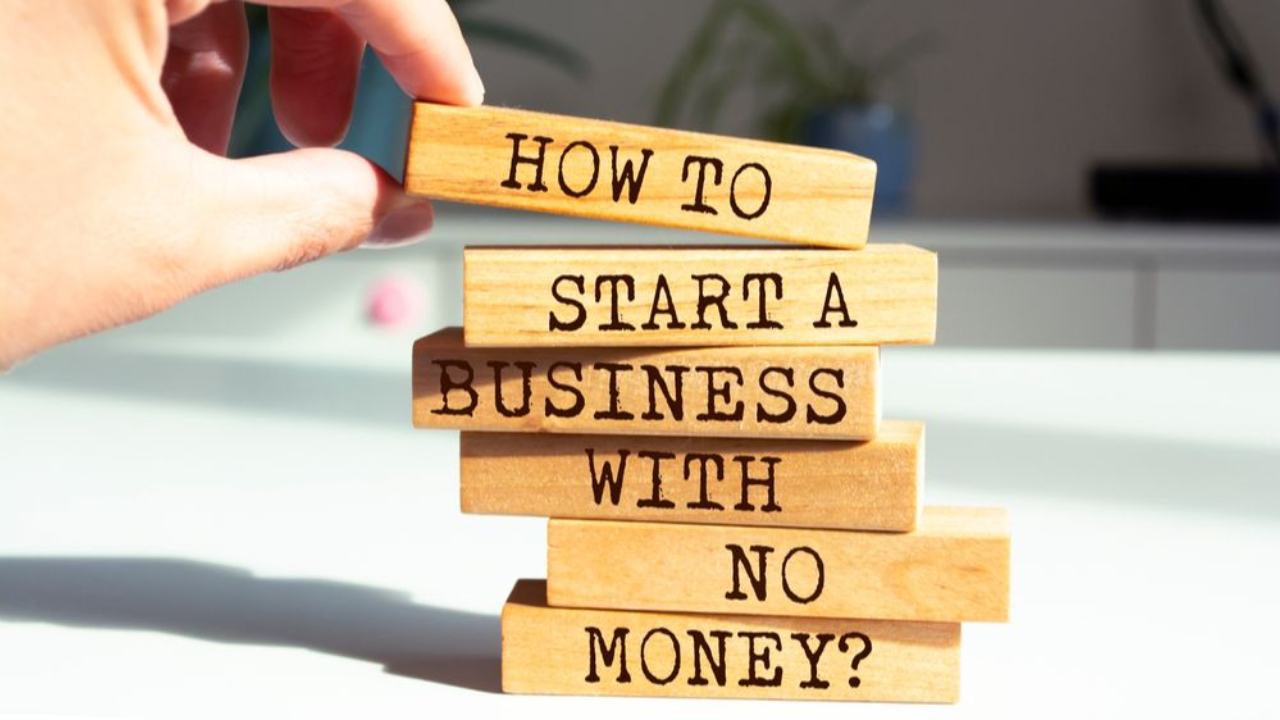
Starting with limited money is possible for many businesses. Starting with literally no cost is not a useful promise.
Every business asks for something: time, a phone, transportation, software, materials, insurance, professional advice, permits, inventory, or the income you give up while doing the work. The amount depends on what you are building. A freelance service and a food product do not carry the same costs or risks.
The better question is:
What is the smallest responsible investment that can help me learn whether this business deserves more?
That is how I would approach the early stage today. It is also how I would help a founder avoid spending heavily before the most important assumptions have been tested.
1. Begin with a customer problem, not a shopping list
New founders are often told to buy a domain, design a logo, choose software, register social accounts, and build a website. Those activities can make the business feel real. They do not establish that a customer needs what you want to sell.
Start by naming:
- the specific person you may serve;
- the situation in which the problem appears;
- what that person does now;
- what the current workaround costs in money, time, risk, or frustration;
- the change they would value.
The U.S. Small Business Administration recommends using market research to understand demand, market size, saturation, alternatives, and pricing. Direct methods can include interviews, surveys, focus groups, and observation.
Your first investment can be a handful of well-chosen conversations.
2. Separate required costs from optional polish
Create three lists.
Required before a responsible test
These are costs tied to safety, legality, delivery, or the minimum customer experience. Depending on the business, they may include a permit, insurance, ingredients, a payment method, transportation, a prototype, or professional advice.
Required after evidence appears
These become useful when customers respond: a better delivery tool, more inventory, a formal website, packaging, bookkeeping support, or an upgraded workspace.
Optional for now
These may be attractive but do not answer the next business question: premium branding, several subscriptions, a large product line, paid advertising before the offer converts, or automation before the process is understood.
Limited money forces a useful discipline: every expense needs a job.
3. Choose a small test that matches the risk
A responsible test is not the same as cutting corners.
- A consultant might offer a tightly scoped paid pilot to one best-fit client.
- A product founder might show a prototype, collect qualified interest, or run a small preorder only after delivery and refund terms are clear.
- A local service business might test one neighborhood, one appointment type, or one partner channel.
- A regulated or safety-sensitive business may need professional guidance before any customer-facing test.
Do not build the full company to answer a question that five conversations, one sample, or one paid pilot could answer.
4. Use a one-page Venture Map
The SBA distinguishes between traditional plans and lean plans. A traditional plan may be appropriate for lenders or investors. A lean plan can be enough to summarize the customer, value proposition, channels, key activities, costs, and revenue assumptions while the model is still changing.
At My Venture Coach, I call this working model a Venture Map because it is meant to change as evidence changes.
Your first map should answer:
- Who is the customer?
- What problem or desired progress matters?
- What first offer could help?
- How will the customer hear about it and buy it?
- What must be true for delivery to work?
- What will it cost?
- What evidence would make you continue, change, pause, or stop?
5. Know the numbers before the first sale
Estimate startup expenses, fixed monthly costs, variable cost per sale, founder time, price, and how many sales would cover the costs. The SBA’s break-even guidance specifically calls out expenses such as licenses, legal fees, deposits, signage, technology, and software.
Do not use “starting small” as permission to ignore cash, tax, or pricing decisions. Small tests should reduce risk, not hide it.
6. Reinvest based on evidence
When a test works, spend against the constraint you can now see.
If customers are confused, improve the offer and message. If delivery is inconsistent, improve the process. If demand is real but capacity is limited, invest in tools or help that protect the customer experience. If the evidence is weak, another round of ads or inventory will not make the model healthier.
Kristi’s field note
I began my security business while working in a corporate leadership role. The early advantage was not a perfect brand or a pile of software. It was proximity to a real problem, professional experience relevant to that problem, relationships, and the willingness to speak directly with potential clients.
That does not mean every founder should copy my path. It means you should identify the assets already available to you—experience, trust, access, knowledge, relationships, or a useful skill—and test how they can create value for a specific customer.
Your next useful step
Write down one assumption that currently makes you want to spend money. Then identify the least expensive responsible test that could give you better evidence.
If you are clarifying an idea and want to build the complete customer, offer, delivery, and financial model, explore Venture Mapping. If you are unsure whether Map, Launch, or Grow fits where you are, take the free three-minute assessment.
Sources
- U.S. Small Business Administration, “Market research and competitive analysis.”
- U.S. Small Business Administration, “Write your business plan.”
- U.S. Small Business Administration, “Calculate your startup costs” and break-even guidance.
- U.S. Small Business Administration, “Fund your business.”
View The Entire Collection
Explore practical guides for mapping a venture, preparing to launch, and growing a business.